Identifying genuine agarwood and authentic oud requires a multi-layered evaluation combining sensory analysis, structural inspection, and vendor transparency. Authentic raw wood features natural resin variegation with clean bubbling upon gentle heating, while pure oud oil displays rich, multi-stage olfactory evolution over 12 to 24 hours. Because visual checks and water tests can be artificially faked, verified provenance and transparent documentation are critical safeguards.
Because genuine agarwood and artisanal pure oud command remarkable valuations, the global marketplace is inundated with counterfeit products, chemically darkened lumber, and adulterated oils. For collectors, investors, and fragrance enthusiasts, distinguishing authentic treasures from deceptive imitations is the single most vital skill to develop.
No single "magic test" can definitively authenticate agarwood in isolation. True discernment involves triangulating physical characteristics, heating behavior, scent evolution, and seller credentials.
Part I: Evaluating Raw Agarwood Wood & Chips
1. Visual and Tactile Examination
Authentic agarwood is a natural botanical formation. As such, it exhibits organic irregularity rather than mechanical uniformity:
- Natural Variegation: Genuine resin veins present alternating micro-stripes of rich chocolate brown, caramel amber, and charcoal-black embedded within fibrous wood grain. Beware of pieces that are uniformly matte jet-black across their entire surface, as this often indicates black shoe polish, dye, or industrial ink.
- Surface Texture: Real agarwood feels natural and slightly fibrous. If the wood feels waxy, sticky, greasy, or leaves oily dark residue on your fingers at room temperature, it has likely been soaked in paraffin wax or spent motor oil to artificially increase weight.
- Cross-Section Inspection: If possible, examine a clean knife cut or break. In genuine agarwood, the dark resin veins permeate deep into the vascular interior. In fake dyed wood, the black color is only a superficial surface skin, with bright white uninfected timber revealed just half a millimeter beneath the surface.
2. The Controlled Heat Test (Mica / Charcoal)
Visual manipulation is common, but aromatic behavior under heat cannot be forged:
- The Bubbling Reaction: When a small sliver of genuine agarwood is placed on a gentle heat source (130°C to 160°C), the natural oleoresin inside the cellular pores liquefies and bubbles visibly like boiling amber sap.
- Smoke Quality: Authentic agarwood produces sweet, cool, balsamic vapor that disperses smoothly without stinging the eyes or triggering coughing. Synthetic incense produces acrid, thick, gray smoke that irritates the throat.
- Residual Ash: Genuine high-grade resin leaves behind minimal gray or white ash without burning into hard, tar-like black crusts.
3. Why the "Water Sinking Test" Alone Can Deceive
A persistent myth claims that if a piece of wood sinks in water, it is guaranteed to be authentic high-grade agarwood.
While true top-grade agarwood does sink due to heavy natural resin saturation, counterfeiters have mastered techniques to force worthless timber to sink: boiling soft wood under pressure with lead powder, baryte mineral powders, or dense industrial resins. Water testing verifies density, but only scent testing and chemical verification can confirm that the density is derived from pure Aquilaria resin.
Part II: Identifying Pure Artisanal Oud Oil (Dehn al Oud)
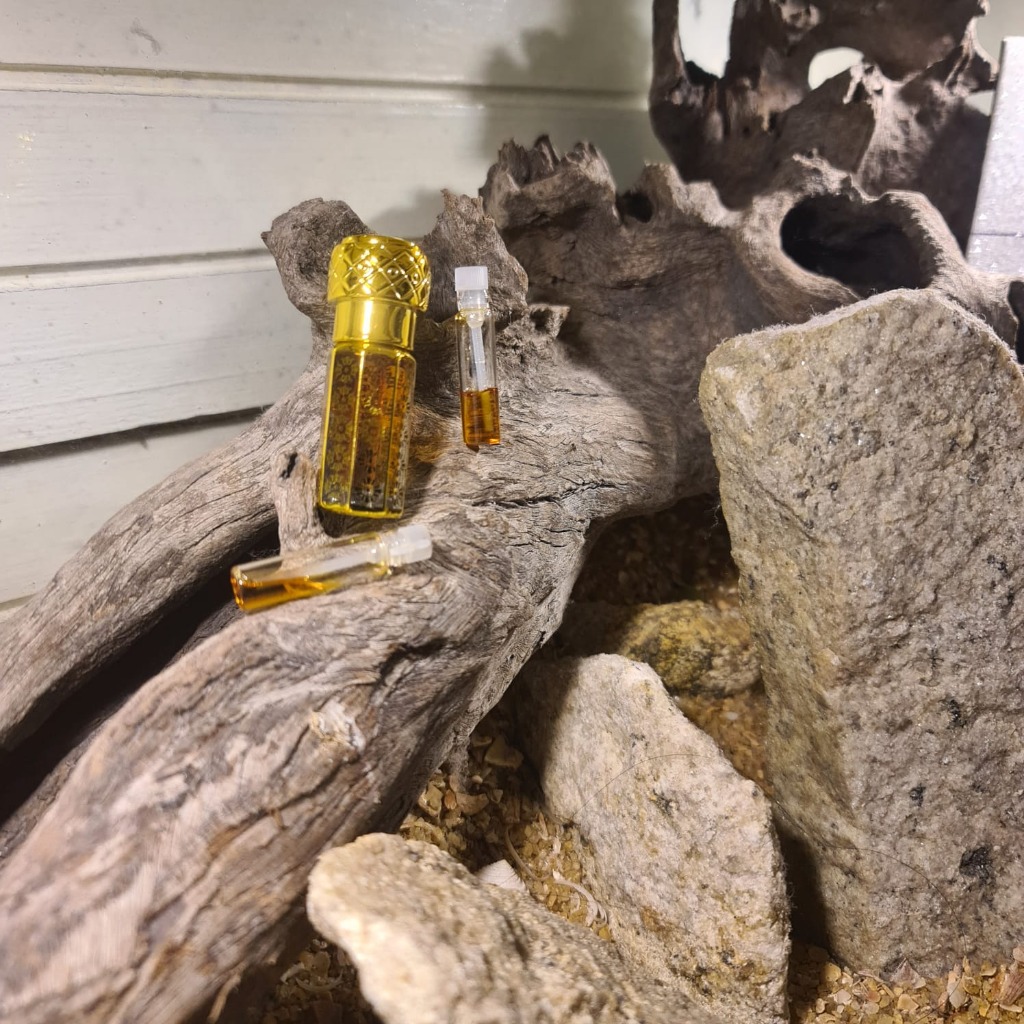
Pure oud oil is one of the most frequently diluted liquids in the luxury perfume trade. When evaluating pure oil, focus on its physical and olfactory trajectory:
| Test Parameter | 100% Pure Artisanal Oud Oil | Adulterated or Synthetic "Oud" |
|---|---|---|
| Opening Notes | Complex, organic, sometimes rustic or medicinal; rich botanical woodiness. | Aggressive rubbing-alcohol blast or harsh, piercing chemical woody-amber aroma. |
| Olfactory Evolution | Evolves dynamically across 3 to 4 stages (wood, leather, fruit, honey, clean balsamic base). | Static, linear, and flat; smells almost identical at hour 1 as it does at hour 6. |
| Skin Longevity | Remains on the skin for 12 to 24+ hours, with clothes retaining scent for days. | Fades rapidly or collapses into an unrefined chemical musky residue within a few hours. |
| Viscosity & Texture | Viscous, silky, and coats glass smoothly; absorbs cleanly without sticky synthetic silicone film. | Either watery and thin (alcohol-cut) or unnaturally syrupy and sticky (cut with heavy glycols). |
Part III: Documentation and Seller Transparency
Ultimately, your strongest protection as a buyer is vendor transparency. A reputable producer or purveyor will readily answer specific questions regarding:
- Botanical Origin: They should specify the exact species (e.g., Aquilaria crassna, Aquilaria agallocha, or Gyrinops walla) and geographic provenance (e.g., Sri Lanka, Cambodia, Thailand, Assam).
- Cultivation vs. Wild Origin: Honest vendors openly state whether their wood comes from ethical managed plantations or heritage stock. Beware of vendors claiming infinite supplies of "century-old wild forest oud," as wild forests are internationally protected.
- Extraction Method: They can describe whether the oil was hydro-distilled, steam-extracted, or aged in glass, and whether the wood underwent prolonged soaking.
- CITES Compliance: Legitimate international shipments of agarwood must be accompanied by CITES permits to ensure legal compliance.
100% Environmental Purity Guaranteed
Explore Nature's Treasure's pure oud collection, distilled with zero chemical additives from sustainably managed plantations.
Frequently Asked Questions About Agarwood Authenticity
No. While authentic sinking-grade agarwood does submerge in water due to high natural resin density, counterfeiters can easily force non-resinous wood to sink by impregnating it with heavy waxes, lead powder, or industrial chemicals. Water testing confirms density, not botanical authenticity.
Synthetic oud typically smells flat, sharp, and monotonous, exhibiting an aggressive chemical or rubbing-alcohol opening followed by a static woody-amber note that does not evolve. In contrast, pure oud oil evolves gradually over 12 to 24 hours through woody, balsamic, leathery, and sweet honeyed stages.
Common adulterants include odorless diluents (such as dipropylene glycol (DPG), dioctyl phthalate, or white mineral oil), cheap carrier oils, synthetic woody aroma chemicals, and inferior essential oils like vetiver or castor oil. Lab testing via Gas Chromatography-Mass Spectrometry (GC-MS) provides definitive proof of purity.
Reputable sellers should offer transparent provenance details, botanical species identification (e.g., Aquilaria crassna or Gyrinops walla), plantation certificates where applicable, and CITES export/import permits for cross-border international shipments.