Harvesting and processing agarwood is a meticulous, multi-stage artisanal procedure. In sustainable plantation forestry, trees that have completed their post-inoculation maturation cycle are felled and sectioned into manageable logs. Skilled carvers then use fine miniature chisels to peel away uninfected, odorless "white wood," liberating the dark, resinous heartwood veins which are subsequently sorted into incense-grade pieces, carving logs, or raw distillation material.
While the biological creation of agarwood resin inside living Aquilaria trunks takes years of silent botanical activity, the transition from standing tree to finished aromatic product is a human art form. No industrial machine can separate precious agarwood resin from ordinary timber; the work requires the practiced eye and steady hand of seasoned artisans.
Examining the journey from harvest to finished classification illuminates why genuine agarwood demands such painstaking labor and why sustainable plantation management has revolutionized the trade.
1. Pre-Harvest Assessment: Determining Maturity
In modern managed plantations, harvesting is never arbitrary. Before a tree is selected, forestry technicians conduct non-destructive examinations to verify resin maturation:
- Infection Timeline: Trees typically mature for 24 to 36 months following inoculation to ensure deep, continuous resin bridging along internal vascular tracts.
- Core Sampling: Miniature increment borers or specialized ultrasonic acoustic testers may assess internal density without compromising structural integrity.
- Trunk Hardness & Coloration: Dark staining around inoculation ports and increased resistance to tactile pressure indicate resin concentration inside the sapwood.
Harvesting prematurely results in soft, pale wood with low oil yield, whereas timing the harvest correctly ensures maximum sesquiterpene accumulation.
2. Tree Felling and Trunk Sectioning
Once verified, the tree is harvested with surgical care. In sustainable operations, every portion of the tree is accounted for:
- Trunk Felling: Directional cuts ensure the trunk does not shatter or fracture delicate internal resin structures upon touching the ground.
- Branch and Root Inspection: Unlike standard lumber operations—where roots and small branches are discarded—in Aquilaria, the taproot and primary branch junctions often harbor exceptionally dense, dark resin pockets due to high natural stress concentrations.
- Log Sectioning: The trunk is cut into manageable cylindrical logs (typically 0.5 to 1 meter in length) and transported to climate-controlled processing workshops.
3. The Art of "Cleaning": Removing White Wood
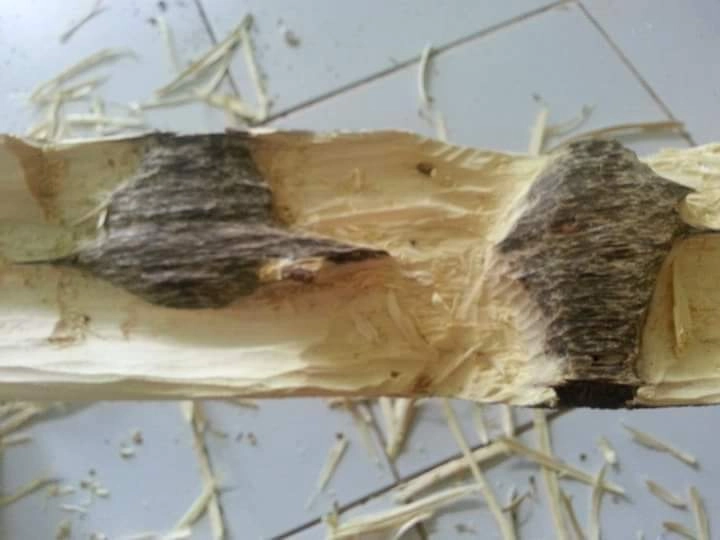
The most labor-intensive phase of agarwood production is known internationally as "cleaning" or "carving." A freshly sectioned log consists primarily of uninfected, soft, pale timber referred to in the trade as white wood.
If white wood is burned, it smells like ordinary campfire smoke, diluting and ruining the fragrance of the resin. Therefore, every millimeter of white wood must be removed:
- Rough Debarking: The outer bark and peripheral sapwood are peeled away to expose the superficial resin veins.
- Micro-Carving: Artisans sit for hours with specialized miniature gouges, curved scrapers, and scalpels, tracing the intricate, branching contours of resin veins. They carve out pale timber pockets from every crevice, twist, and hollow.
- Polishing and Brushing: Fine brass or nylon brushes remove lingering wood dust without dulling the natural luster of the resin-saturated ridges.
Cleaning a single kilogram of intricate, high-grade agarwood carving chips can require up to 40 to 60 hours of continuous manual carving by an experienced artisan. This intense labor investment represents a significant component of the finished material's market value.
4. Classification and Wood Sorting
After manual cleaning, the harvested material is divided into distinct categories based on density, form factor, and intended application:
| Category | Visual & Physical Characteristics | Primary Commercial Destination |
|---|---|---|
| Sculptural Logs | Large, continuous pieces with striking natural contours, heavy weight, and dark resin ribbons. | Private art collections, high-end display specimens, temple offerings. |
| Incense Chips | Thin flakes, shells, and carved slivers containing moderate to high resin saturation. | Personal bukhoor, Japanese Koh-do ceremonies, tea ceremonies. |
| Bead / Carving Stock | Solid, dense blocks without interior voids or soft rot. | Handcrafted prayer beads (malas), artistic Buddhist figurines. |
| Distillation Grade | Fragmented resin chips, shavings, and lower-density resin-infused fibers. | Pulverized into wood meal for artisanal pure oud oil distillation. |
5. Drying and Stabilization
Freshly harvested agarwood contains residual biological moisture and sap. If packaged damp, it can develop surface mold or sour off-notes.
Processed chips and logs are placed on raised drying racks in shaded, well-ventilated drying rooms. Direct sunlight is strictly avoided, as solar UV exposure and excessive heat cause volatile aromatic top-notes to evaporate. Gradual drying over several weeks stabilizes moisture content below 10% to 12%, ensuring decades of aromatic longevity.
Transparent Plantation Stewardship
Explore how Nature's Treasure manages Aquilaria trees from sapling cultivation to artisanal distillation.
Frequently Asked Questions About Agarwood Harvesting
In certain traditional systems, minor branch pruning or selective scraping can yield small resin chips from living trees. However, because high-grade resin forms deep within the interior trunk and taproot, commercial harvesting in managed plantations typically involves felling mature trees that have completed their multi-year resin maturation cycle, followed immediately by replanting.
"White wood" refers to the uninfected, pale, odorless timber of the Aquilaria tree that contains no resin. During processing, carvers painstakingly scrape and carve away this non-resinous wood to expose the dark, resinous veins underneath. Any remaining white wood dilutes fragrance and reduces value.
Harvested wood is manually sorted into distinct grades: dense, dark, aesthetically shaped pieces are retained as ornamental display specimens or premium incense wood; thinner resin flakes become commercial incense chips; and lower-density or fragmented resinous fibers are pulverized for pure oud oil distillation.
Artisans use specialized miniature woodworking tools, including fine curved gouges, hand-sharpened chisels, razor scalpels, and stiff bristle brushes, allowing them to follow the intricate natural contours of resin veins without damaging the brittle aromatic core.