Agarwood resin forms inside Aquilaria trees as an induced phytoalexin defense response. When physical damage or microbial exposure compromises the tree's outer bark and inner xylem, living parenchyma cells surrounding the wound synthesize aromatic secondary metabolites (sesquiterpenes and chromones) that permeate the wood fibers, compartmentalizing the damaged zone and transforming ordinary soft timber into dense, resin-saturated heartwood.
In the study of forestry and plant biology, trees typically synthesize protective resins as part of their regular developmental cycle—as observed in coniferous pines or tropical dipterocarps. Aquilaria, however, follows an entirely different biological pathway. Under ordinary forest conditions, an Aquilaria tree produces zero resin. The occurrence of agarwood is strictly a responsive adaptation triggered by ecological stress.
Understanding how this cellular transformation occurs provides essential clarity for investors, perfumers, and collectors seeking to distinguish authentic, naturally induced agarwood from artificial treatments.
The Genus Aquilaria: Habitat and Characteristics
Aquilaria is a genus of roughly 15 to 21 accepted species of evergreen trees belonging to the family Thymelaeaceae. They are indigenous to the humid tropical and subtropical rainforests of South and Southeast Asia, extending from the northeastern foothills of the Himalayas through Indochina, the Malay Peninsula, and across the Indonesian archipelago.
Key botanical features of healthy Aquilaria trees include:
- Growth Rate: In tropical climates with adequate rainfall, Aquilaria grows relatively quickly, often attaining heights of 15 to 30 meters and trunk diameters of 40 to 60 centimeters over 6 to 10 years.
- Foliage & Bark: Leaves are simple, alternate, and glossy dark green; the inner bark is remarkably tough and fibrous, historically utilized by indigenous populations for rope and bark cloth.
- Wood Architecture: Healthy, uninfected heartwood is pale white to straw-colored, diffuse-porous, and remarkably lightweight, with a low specific gravity (often 0.35 to 0.45).
Because the uninfected wood possesses minimal structural strength and decomposes rapidly when exposed to tropical soil moisture, loggers have historically had zero interest in normal Aquilaria lumber.
The Step-by-Step Mechanism of Resin Synthesis
When an Aquilaria tree is wounded in the wild—whether by wood-boring beetle larvae (such as Zeuzera conferta), strong monsoonal winds snapping branches, or intentional human wounding—the tree initiates a sophisticated physiological response:
Phase 1: Mechanical Injury & Oxidation
The physical breach ruptures the tree's outer periderm and severs active xylem vessels, exposing inner living tissues to atmospheric oxygen and airborne microflora. Cellular fluids oxidize, and the tree senses localized tissue necrosis.
Phase 2: Signal Transduction & Phytoalexin Induction
The tree's living axial and ray parenchyma cells respond to cellular stress signals (such as jasmonic acid pathways). These cells activate enzyme cascades that redirect photosynthetic carbohydrates toward the biosynthesis of secondary defensive compounds.
Phase 3: Oleoresin Infusion of Vascular Pathways
Instead of simply covering the wound with sap on the exterior, the tree secretes a thick, complex mixture of aromatic sesquiterpenoids and 2-(2-phenylethyl)chromone derivatives into the xylem vessels, ray cells, and intercellular spaces immediately adjacent to the infected zone.
Phase 4: Compartmentalization and Hardening
The resin acts as a biostatic barrier, sealing vascular conduits to prevent fungal hyphae from traveling freely up and down the stem. Over successive seasons, repeated stress cycles deposit additional resin layers, hardening the wood structure and turning it dark brown or jet-black.
| Characteristic | Uninfected Aquilaria Wood | Resin-Infected Agarwood |
|---|---|---|
| Color | Pale white, cream, or light straw | Dark brown, dark amber, reddish-black to jet-black |
| Specific Gravity | 0.35 – 0.45 g/cm³ (very buoyant) | 0.85 – 1.25+ g/cm³ (highest grades sink in water) |
| Aromatic Content | Negligible volatile oils | Rich in sesquiterpenes (e.g., agarospirol, jinkoh-eremol) and chromones |
| Olfactory Behavior | Burns like ordinary paper or pine shavings | Bubbles, melts, and exudes sweet balsamic incense upon gentle heating |
Key Factors Affecting Resin Quality and Density
Not all agarwood develops identical characteristics. The chemical profile, color, density, and fragrance profile of the finished resin depend on several biological and environmental factors:
- Tree Age and Maturity: Trees that are at least 6 to 8 years old possess broader vascular development and robust sap circulation, allowing them to sustain a protracted immune defense without succumbing to structural rot.
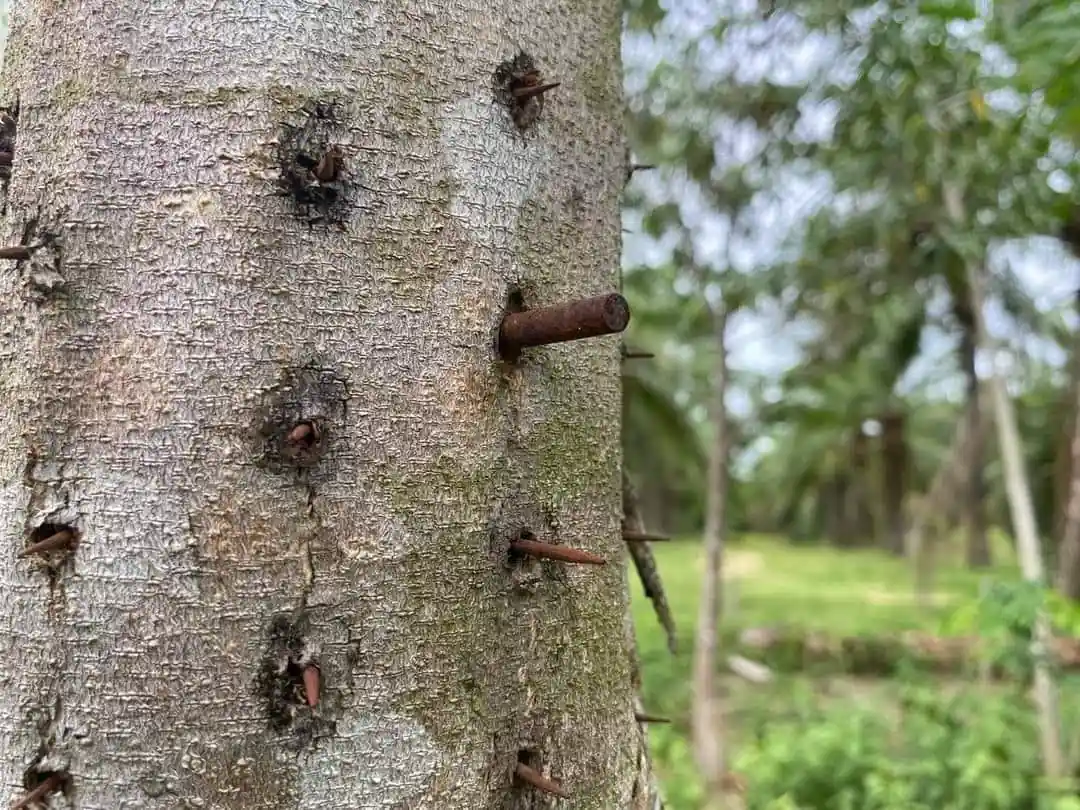
- Inoculation Method: Traditional wild techniques relied on blunt nails or crude chemical drenching, which often rotted the tree. Modern plantation forestry—such as Nature's Treasure's Thailand Inoculation Technology—employs eco-friendly, biological induction formulations that stimulate vigorous natural resin veins without chemical toxicity.
- Duration of Infection: Resin density correlates directly with the duration of the tree's active defense. While initial resin appears within 6 to 12 months, deep, dark, sinking-grade density typically requires 24 to 48 months or longer of post-inoculation maturation.
- Microclimate and Soil: Tropical temperature stability, adequate annual monsoonal rainfall, and well-draining acidic soils encourage steady tree metabolism and rich aromatic ester formation.
In Sri Lanka, the genus Gyrinops (specifically Gyrinops walla) shares this same remarkable defensive chemistry. Modern ethical plantations cultivated by Nature's Treasure utilize select Aquilaria seedlines and proven environmental inoculation methods, creating a sustainable model that preserves native biodiversity. Explore our comprehensive guide to agarwood in Sri Lanka.
Managed Agarwood Tree Program
Participate in sustainable, geotagged Aquilaria tree management supported by Thailand Inoculation Technology.
Frequently Asked Questions About Resin Formation
Aquilaria trees synthesize resin as an induced defense mechanism (phytoalexin response). When the tree's bark or xylem is breached by physical wounding, boring insects, or microbial infection, the tree secretes aromatic oleoresin into adjacent cells to seal off damaged areas and inhibit pathogens from spreading.
The primary cultivated species include Aquilaria crassna, Aquilaria malaccensis, Aquilaria sinensis, and Aquilaria subintegra, alongside related species such as Gyrinops walla in Sri Lanka. Each species displays subtle differences in growth vigor, resin chemistry, and regional adaptation.
Artificial inoculation is the agricultural process of introducing controlled, sterile physical punctures or microbial cultures into the trunk of a mature tree to trigger its natural defense mechanism uniformly, allowing high-quality resin to develop without destroying wild forests.
No. In fact, a healthy, vigorous tree with active sap flow produces denser resin over several years precisely because its living cellular machinery is actively synthesizing secondary metabolites in response to the stress.