Agarwood is exceptionally valuable because only a tiny fraction of Aquilaria trees ever produce the resin naturally, requiring years or even decades of biological defense to accumulate high density. Furthermore, extracting the pure resinous heartwood demands painstaking hand-carving that yields minimal finished material from large timber masses, while global demand in international perfumery, religious ceremonies, and private collections far outstrips sustainable global supply.
Few botanical materials on earth command the financial and cultural prestige of agarwood. For centuries, merchants and chroniclers have observed that the highest grades of agarwood and its distilled essence, pure oud, can trade at valuations rivaling precious metals. Yet unlike gold or gemstones—which are mineral, inorganic, and chemically stable—agarwood is an ephemeral botanical product born from living trees.
Understanding why agarwood commands such remarkable value requires looking beyond market headlines and examining the biological, temporal, and artisanal mechanisms that govern its creation.
1. Extreme Natural Scarcity: The Anomaly of Resin Formation
The foremost driver of agarwood value is its inherent rarity. Unlike conventional forest crops—where every healthy tree harvested provides usable lumber—healthy Aquilaria trees contain no agarwood whatsoever. The wood of an uninfected Aquilaria is pale, soft, odorless, and structurally unsuitable for premium timber.
In pristine wild ecosystems, resin formation happens purely by chance. Estimates from botanical surveys indicate that fewer than two percent of wild mature Aquilaria trees ever develop significant resin deposits. Because the infection begins deep inside the trunk or root system, early forest gatherers could not easily determine whether a standing tree contained valuable heartwood without cutting into the trunk, historically leading to tragic over-harvesting and severe wild depletion.
Today, all wild species of Aquilaria and Gyrinops are strictly protected under CITES Appendix II regulations. This legal protection has firmly shifted ethical trade toward managed plantations, where specialized cultivation practices replicate the tree's defensive response safely and sustainably.
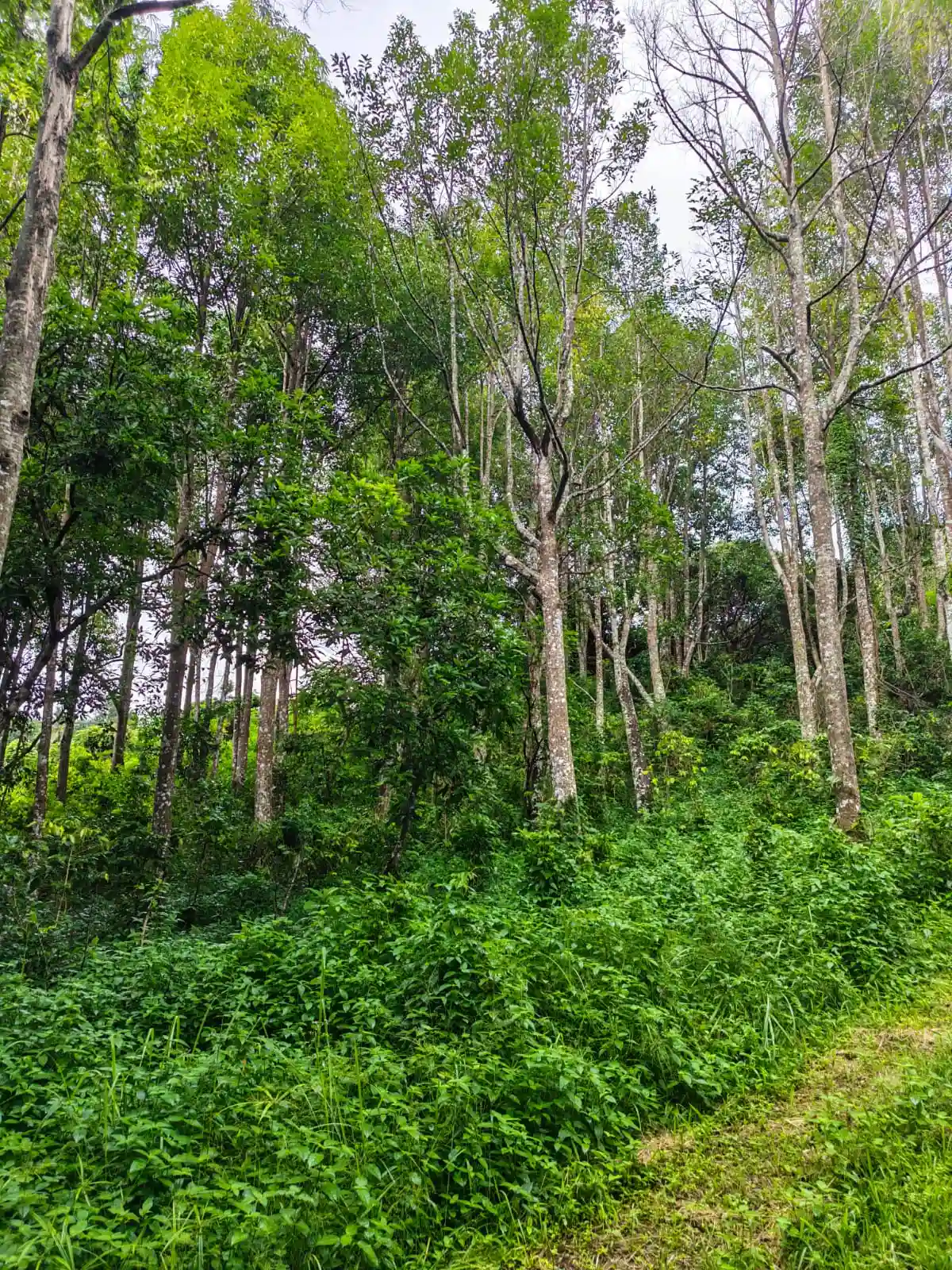
2. The Time Dimension: Years of Maturation
Agarwood cannot be rushed. It operates on biological timelines that defy industrial mass-production schedules:
- Vegetative Growth: An Aquilaria sapling must grow undisturbed for 4 to 8 years simply to reach sufficient trunk girth, vascular maturity, and structural vigor before it can tolerate resin induction.
- Resin Maturation Period: Following inoculation (the controlled introduction of biological agents or wounding), the tree requires an additional 2 to 4 or more years of active immune response to synthesize, concentrate, and harden dense oleoresin veins throughout the heartwood.
- Distillation Aging: Once harvested and distilled into pure oud oil, the finest extracts undergo months or years of curing in glass carboys to allow volatile top-notes to mellow into profound, multi-faceted base accords.
An investor, plantation manager, or artisan must commit capital, land, and expertise over nearly a decade before harvesting a single gram of premium material. This extended cycle inherently restricts sudden increases in global supply.
3. The Yield Paradox and Labor-Intensive Processing
Even after years of careful nurturing, the final yield of resinous wood is astonishingly small relative to total biomass. A mature tree weighing upwards of 100 to 200 kilograms might produce only 1 to 5 kilograms of commercial agarwood chips, with true "sinking-grade" resin representing only a fraction of that harvest.
Furthermore, separating valuable resin from inert timber cannot be automated. Every piece must be hand-carved by skilled artisans using tiny curved chisels and blades, carefully scraping away microns of pale white wood while preserving the dark resinous ridges intact:
| Stage of Production | Process Required | Impact on Final Valuation |
|---|---|---|
| Selective Harvest | Careful felling and dissection of mature trunks to trace internal resin veins. | Ensures tree is harvested at peak resin accumulation without unnecessary waste. |
| Manual Cleaning | Hundreds of hours spent carving away non-resinous wood fibers by hand. | Labor intensive; preserves delicate resin architecture that determines grade. |
| Oil Distillation | Hydro- or steam-distilling finely ground wood for several days. | Requires dozens of kilograms of resinous wood to yield a single 3ml bottle of pure oil. |
For pure oud oil, the extraction yield typically ranges from 0.1% to 0.5% depending on wood quality and distillation efficiency. It often requires 20 to 50 kilograms of processed agarwood to produce a single tola (approximately 11.7 grams or 12ml) of pure artisanal oil. To learn how this distillation unfolds, explore our article on how oud oil is made.
4. Inimitable Olfactory Complexity
Another fundamental pillar of agarwood value is its unique olfactory profile. Modern gas chromatography-mass spectrometry (GC-MS) analysis reveals that pure agarwood resin contains over 150 distinct identified chemical constituents, primarily complex sesquiterpenes, chromones, and aromatic esters.
Unlike simple essential oils like lavender or peppermint—which can be easily simulated using a handful of synthetic aroma chemicals—natural agarwood resin develops a holographic, evolving scent profile that shifts on the skin over 12 to 24 hours. Perfumers in the world's most prestigious fragrance houses consider genuine oud irreplaceable when formulating high-end bespoke compositions.
In the agarwood marketplace, prices can range from modest amounts for commercial incense wood chips up to extraordinary sums for ancient sinking logs or vintage distilled reserves. For an in-depth explanation of how density, aroma, and resin content determine valuation, read our guide to agarwood grades and quality.
5. Persistent Global Demand Across Multiple Cultural Sectors
Demand for agarwood is not confined to a single market; it is sustained simultaneously by three powerful, independent global sectors:
- Middle Eastern Heritage & Lifestyle: In the Gulf states, burning pure agarwood (oud wood) in the home and wearing concentrated pure oud oil is an ingrained daily cultural tradition and a universal marker of social prestige.
- Asian Ritual & Collector Markets: In China, Japan, Taiwan, and Vietnam, raw agarwood is cherished for Buddhist ceremonial use, sculptural art carving, and collectible prayer beads (malas), with collectors valuing aged specimens much like rare antique wines.
- Western Fine Fragrance: Major European and American luxury perfume brands have made oud an essential pillar of their high-end private blends, consistently driving demand for ethically certified raw materials.
With supply biologically constrained and global demand continuously expanding, the economic fundamentals underpinning agarwood remain exceptionally resilient.
Explore Our Single Estate Oud Oils
Crafted from mature Aquilaria trees cultivated with transparent provenance and pure steam extraction.
Frequently Asked Questions About Agarwood Value
Agarwood earned these monikers because gram for gram, top-tier resin-saturated agarwood and pure distilled oud oil historically command prices exceeding precious metals. The combination of intense scarcity, slow biological formation, and cultural prestige underpins this status.
Valuation depends strictly on resin density (whether the wood sinks or floats), age, botanical origin, purity of distillation, and the meticulousness of manual cleaning. Pale, low-resin wood chips cost a small fraction of dense, dark, sinking-grade heartwood or multi-year aged pure oud oil.
No. While synthetic fragrance chemistry can mimic certain isolated molecules of oud, synthetic substitutes lack the complex matrix of hundreds of sesquiterpenes and chromones produced naturally by the tree over years of biological response. Connoisseurs and luxury perfumers easily identify the difference.
Sustainable plantation forestry replenishes commercial supply without depleting threatened wild forests. By applying controlled, eco-friendly inoculation methods, plantations produce consistent, high-resin agarwood that offers transparent provenance and legal compliance under CITES frameworks.