Agarwood is the dark, aromatic, resin-impregnated heartwood formed inside evergreen trees of the Aquilaria (and closely related Gyrinops) genus. Unlike ordinary timber, agarwood develops only when a healthy tree responds to wounding or microbial exposure by producing a dense, protective oleoresin that transforms soft white wood into one of the world's rarest and most precious botanical aromatics.
Throughout world history, few natural materials have captured human reverence quite like agarwood. Variously referred to as oud, aloeswood, gaharu, or jinkoh, this aromatic wood occupies a singular position at the intersection of botanical curiosity, cultural ritual, and artisanal perfumery.
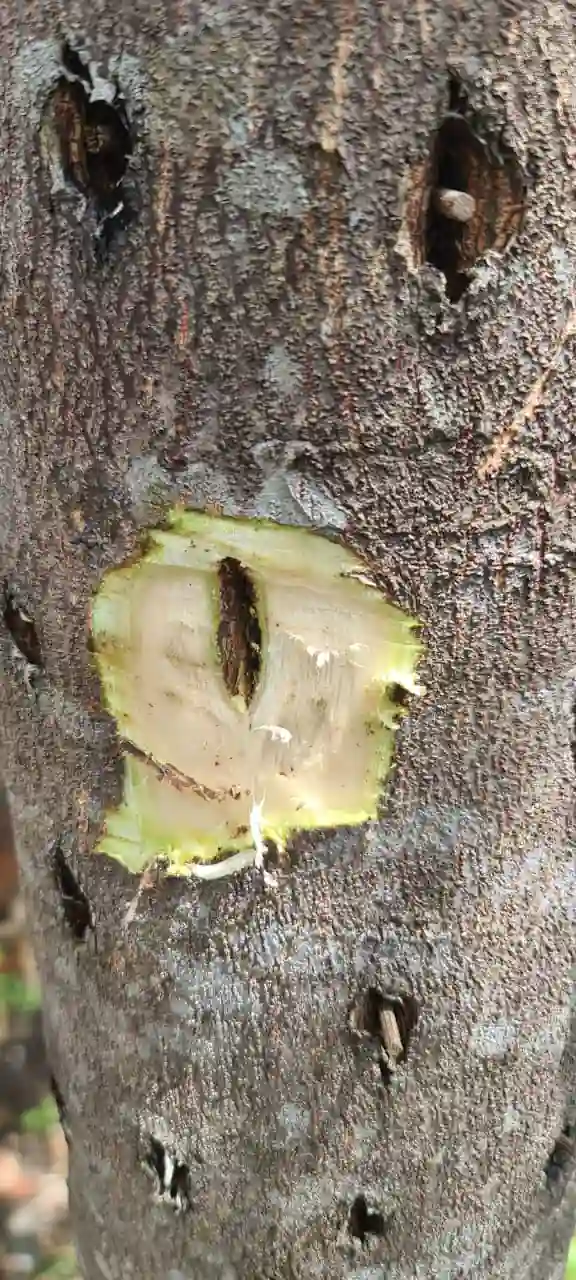
To understand agarwood, one must first dismantle a common misconception: agarwood is not simply a timber harvested from an exotic tree species in the conventional manner of teak or sandalwood. Under normal conditions, an undisturbed Aquilaria tree produces pale, fibrous, and virtually odorless timber of low commercial utility. Agarwood only comes into existence through a biological transformation—a living immune defense that unfolds quietly inside the tree trunk over months and years.
The Biology: Aquilaria Trees and Resin Defense
The trees capable of yielding agarwood belong primarily to the genus Aquilaria, fast-growing evergreen forest trees native to Southeast Asia, southern China, and parts of South Asia. A related genus, Gyrinops, also exhibits this resin-forming capability in island environments such as Sri Lanka and Indonesia.
When an Aquilaria tree suffers physical injury—whether caused by burrowing insects, storm breakage, lightning, or human intervention—the exposed vascular system becomes vulnerable to microbial colonization. To seal off the damaged tissue and restrict microbial penetration, the tree synthesizes a complex mixture of sesquiterpenes and 2-(2-phenylethyl)chromone derivatives.
This dense, fragrant oleoresin gradually infuses the surrounding xylem fibers. As resin saturation deepens, the affected wood undergoes fundamental changes:
- Density: Ordinary white wood is soft and light; heavily resinous agarwood becomes so dense that the highest grades sink in water.
- Color: Pale cream wood shifts to rich shades of dark amber, chocolate brown, and charcoal black.
- Aroma: The inert wood develops a rich, complex aroma that remains dormant at room temperature but radiates warmth and sweetness when gently heated.
Agarwood vs. Oud: Clarifying the Terminology
Confusion often arises regarding the relationship between the words "agarwood" and "oud." While the terms are frequently used interchangeably in contemporary perfume culture, understanding their historical and practical nuances clarifies what you are evaluating:
| Term | Origin / Etymology | Primary Modern Usage |
|---|---|---|
| Agarwood | Derived from Sanskrit aguru ("not light" or heavy, referring to resin density). | Standard botanical and English trade term for raw resinous wood, chips, and logs. |
| Oud (Oudh) | Arabic word literally meaning "wood" or "rod." | Refers to incense wood in Middle Eastern traditions, and universally to the distilled essential oil. |
| Gaharu | Malay / Indonesian vernacular term. | Commonly used across Southeast Asian trade hubs to describe raw agarwood. |
| Aloeswood / Calambac | Historical European and Portuguese trade nomenclature. | Classical literature reference, distinct from the succulent Aloe vera. |
| Jinkoh | Japanese term meaning "sinking incense." | Used within the traditional Japanese art of incense appreciation (Koh-do). |
In practical terms, when someone speaks of burning "oud wood," they are referring to dried chips of resinous agarwood placed over heat. When they discuss an "oud perfume," they are referring either to the distilled pure essential oil extracted from this wood or a fragrance composed around that aromatic profile. For a detailed breakdown of how the pure oil is distilled, read our companion guide on how oud oil is made.
Why Resinous Wood Differs from Ordinary Timber
In conventional commercial forestry, timber is valued for structural uniformity, straight grain, and rapid growth. Agarwood upends these traditional metrics entirely:
The value of agarwood lies strictly in the degree of resin saturation rather than timber volume. A whole Aquilaria trunk may weigh 150 kilograms, yet contain only 2 to 4 kilograms of genuinely resinous agarwood. The process of harvesting requires experienced craftsmen to delicately carve away the uninfected, pale "white wood," isolating the dark, resinous pockets without shattering the delicate resin veins.
Because wild trees were historically felled indiscriminately in search of hidden resin pockets—often destroying non-infected trees in the process—wild Aquilaria populations experienced severe decline across Southeast Asia. This historical pressure led to international protection under CITES (the Convention on International Trade in Endangered Species) and catalyzed the emergence of modern, sustainable managed plantation forestry.
Cultural, Ceremonial, and Olfactory Significance
The cultural reverence for agarwood spans millennia across diverse civilizations:
- Arabian and Gulf Heritage: Scenting living spaces and clothing with smoking agarwood chips (bukhoor) remains an enduring symbol of hospitality, dignity, and personal elegance.
- Buddhist and Hindu Traditions: Mentioned extensively in Sanskrit epics such as the Mahabharata, agarwood incense has accompanied spiritual meditation and temple rituals for more than two thousand years.
- East Asian Koh-do: In Japan, the ceremonial "listening to incense" elevates the sensory evaluation of agarwood grades to an aesthetic discipline practiced with contemplative mindfulness.
- Haute Parfumerie: In modern luxury perfumery, genuine oud oil provides an irreplaceable base note prized for its depth, persistence, and complex balsamic warmth.
Rather than depleting dwindling wild forest resources, Nature's Treasure manages Aquilaria tree plantations using eco-friendly inoculation methodologies. This controlled stewardship induces natural defensive resin formation in living trees while supporting environmental reforestation and transparent provenance. Learn more about our sustainable agarwood tree management.
Experience Pure Environmental Oud
Distilled from sustainably managed, mature Aquilaria trees with zero chemical additives.
Frequently Asked Questions About Agarwood
Agarwood is resin-saturated heartwood that develops within Aquilaria and Gyrinops trees as a biological defense mechanism following physical injury or fungal interaction. Healthy wood of these trees is pale, light, and virtually odorless; only after resin impregnation does the wood turn dark, dense, and intensely aromatic.
The terms are closely interrelated but describe different forms: "agarwood" generally denotes the resinous wood itself (in the form of logs, carved pieces, or incense chips), whereas "oud" (the Arabic word for wood) commonly refers either to the wood burned for fragrance or to the concentrated essential oil extracted from it via distillation.
Agarwood is not normal heartwood. Without an external stress factor—such as insect boring, wind breakage, or deliberate microbial inoculation—an Aquilaria tree grows normally and produces no resin. In wild forests, only a tiny fraction of mature trees ever produce significant resin.
When heated gently on coals or an electric burner, authentic agarwood releases a complex olfactory spectrum comprising balsamic woodiness, dry amber, warm earth, subtle honey, and sweet incense notes, without the acrid or chemical smoke characteristic of synthetic incense.